

There is a quiet moment that comes to many people, though it rarely arrives with clarity. It happens somewhere between what was once imagined and what is now real. The path that once felt certain begins to shift, and suddenly, life looks very different from what was planned.
Finding yourself in work that was never part of the plan can feel unsettling at first. There is often a sense of confusion, sometimes even disappointment. The mind tends to wander back to earlier dreams, the ones that felt more aligned with identity, passion, or ambition. It is easy to measure the present against those expectations and feel like something has been lost along the way.
But there is another side to this experience, one that reveals itself slowly.
Work that was never part of the plan has a way of teaching lessons that no carefully designed path ever could. It places you in environments that demand patience, resilience, and humility. It asks you to adapt before you feel ready. It introduces you to people whose stories expand your understanding of struggle, effort, and quiet strength.
In these moments, something subtle begins to change.
Instead of focusing on what the work is not, there is a gradual shift toward seeing what it offers. The routine, no matter how repetitive, begins to shape discipline. The challenges, no matter how small they seem from the outside, begin to build endurance. The people around you, often overlooked by the world, begin to show you what dignity truly looks like.
There is a kind of honesty in this kind of work. It does not try to impress. It does not come with recognition or applause. Yet it demands presence. It asks you to show up fully, even when the motivation is not there, even when the outcome feels uncertain.
Over time, that consistency starts to form something deeper than skill. It begins to shape identity.
You start to see yourself differently, not based on titles or expectations, but based on what you can endure and how you treat others along the way. You begin to notice the quiet strength it takes to keep going. You recognize the value of effort that no one else sees. And perhaps most importantly, you develop a deeper awareness of the people around you, their struggles, their effort, their humanity.
This shift is not loud. It does not announce itself. But it stays.
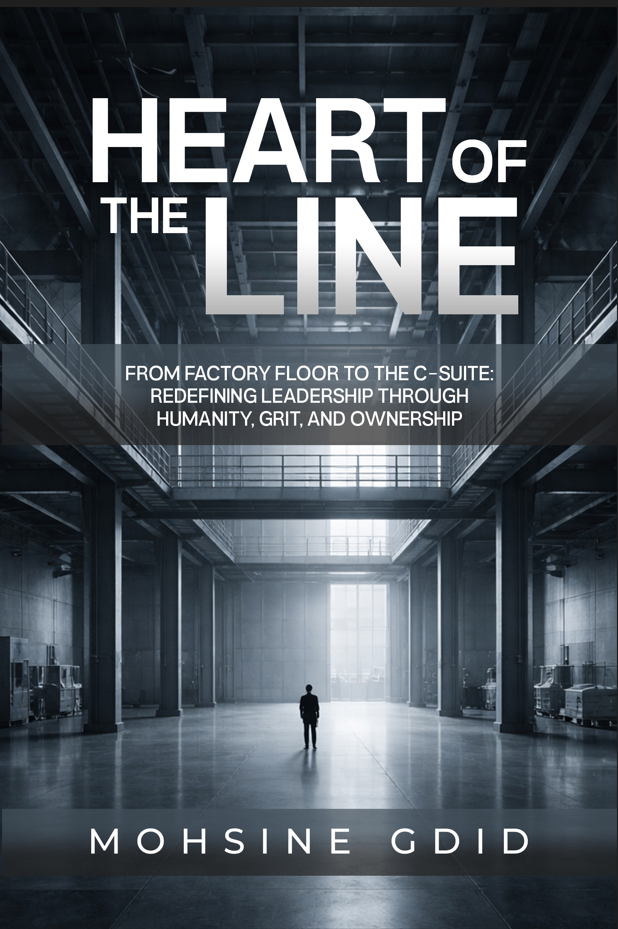
Stories like these are not always told in grand, dramatic ways. Sometimes they unfold in places that feel ordinary, even harsh. In Heart of the Line by Mohsine Gdid, there is a reflection of this very journey. It is not presented as a perfect path, but as a lived experience shaped by work that was never part of the original plan. Through that experience, something far more meaningful begins to take form.
What becomes clear is that the work itself is only one part of the story.
The greater transformation happens within.
There is a certain grounding that comes from starting in a place that demands everything from you without offering much in return. It removes the illusion of control. It replaces expectations with reality. And in doing so, it creates space for growth that feels real and lasting.
Finding yourself in unexpected work does not mean losing direction. In many ways, it means discovering a new one. Not the kind built on external validation, but the kind shaped by experience, effort, and perspective.
The path may not look the way it once did. It may not carry the same labels or recognition. But it carries something else. It carries depth. It carries understanding. It carries a sense of self that is not easily shaken.
And sometimes, that is far more valuable than any plan that once existed.